Foreword: If your space isn’t too cluttered and just need help getting started cleaning up, check out our blog post here on the 7 Quick Steps to a Tidy Home.
As Professional Organizers, we use many different strategies to organize a space. Here at SLS, one of our favourite ways is using the method of SPACED.
What is SPACED?
SPACE is a logical and appropriately named acronym originally developed by one of the mostly widely respected Professional Organizers, Julie Morgenstern to declutter and organize space. Each step within SPACE lays out what to do.
We’ve built upon Julie’s method and this is how we like to approach decluttering using SPACED:
S: sort
We first start by getting 6 boxes/bins/bags together for sorting items, files, furniture, tasks, events, etc by categories.
Label them:
1 – To Keep/Put Away
2 – Action – items that require some sort of action to be taken (for example, in order for a broken vacuum to be repaired, you need to research where to take it for repair and then actually take it in).
3 – Donate – usable items you can pass on to someone that will give them more life.
4 – Garbage
5 – Recycling
6 – Can’t decide – you will come back to this category later once you’ve decided on the other things.
Combining like things allows us to be able to see how much we have within each category.
P: purge

Photo via Tresor Apartments
Next we decide which items we do not need and that aren’t serving us. Excess creates more for us to remember, to keep track of, to clean, and to maintain. In order to purge we must decide on where those things must go.
We absolutely do not support throwing things in the garbage or sending them to landfill if they can be otherwise reused or recycled – after all we aim to be as Zero Waste as possible. 🌿
Using the philosophy of Reduce, Reuse, Recycle, we at SLS partner with many organizations and recycling facilities to decide how best to pass on the items that are no longer serving our clients. Some of the organizations we have partnered with in the Vancouver area include:
A: assess and assign
After purging we must assess what items we have left, how much space those will need, and assign a location/space those will go.
This is a good time to start thinking about what kind of aesthetic you want for your space.
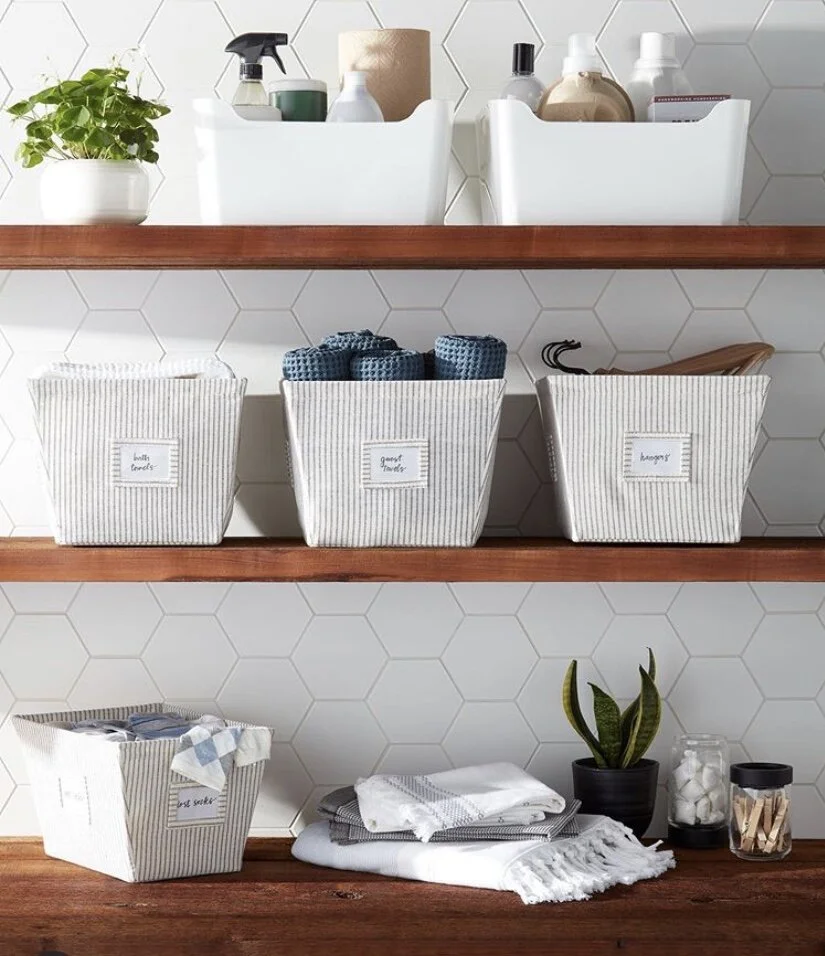
Container examples from The Container Store
C: contain
Once we assign a space for the items you’d like to keep, we will figure out how to contain the items. Containers help keep your assorted categories still sorted into the categories you created. We use bins, baskets, boxes, organizers with different fabrics, wood, recycled, reclaimed, upcycled, local and as sustainably sourced materials as possible. After placing items in their new containers, we will label the containers for ease of use, to remind you where things are when you find them, and where they go back to once you are finished with them.
E: evaluate and equalize
Finally, after everything is sorted, purged, assessed, assigned, contained, and labeled, it’s important to live with the system for a period of time to see how it works for you. Each home, person, and organizing system is unique to each of our clients. A big part of how we measure a successful organizing process is to evaluate how the system we created is working, understand the gaps, and make tweaks to better suit your life.
D: developing the aesthetic
As we are assessing our SPACE process throughout, we begin to develop and refine the aesthetic. At SLS we know that most clients have some vision(s) of what they would like their space to look like.
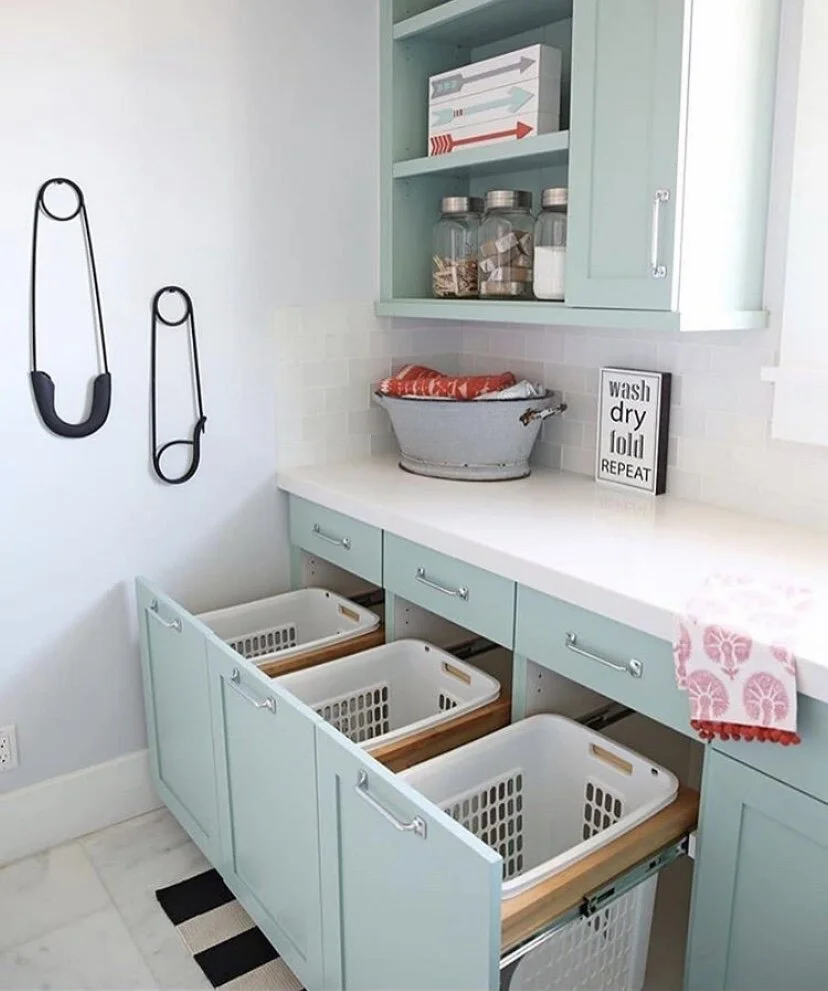
Laundry room organization by The Sunny Side Up Blog
One of the first questions we will ask you is, “Do you have any inspirations or photos of spaces you like?”
We want to see what you see.
Researching inspirational images on Pinterest, Instagram, and Google will give you some ideas of what type you like, which will then inform you where you should purchase your containers.
Developing an aesthetic to suit your style is just as important as developing an organizing system to make the items in your space accessible and able to use.
Both are needed to create a sustainable living environment you will love to live in and be able to thrive within. 🌿
Sustainable Lifestyle Solutions is an interior design, professional organizing, and sustainable living firm in Vancouver, BC. We connect sustainable design and a zero waste lifestyle to transform our clients’ spaces so that their homes and offices can support them in achieving their goals and dreams while also improving their mental health and reducing environmental impact. We create beautiful, healthy spaces that are earth-friendly and can evolve with our clients over time.